Presidents Collaborating with Alien Populations?

An American man, Frank Chu (born March 24, 1960), has engaged in protests and campaigns seeking to impeach Bill Clinton, Grover Cleveland, George W. Bush, Ronald Reagan, and other former U.S. Presidents.

Chu mostly protests daily, by walking throughout downtown San Francisco to publicise his claim that the former presidents are guilty of collaborating with an evil network of alien populations called the "12 Galaxies" who film him against his will, broadcast this footage intergalactically, and embezzle the royalties he is owed as a television and movie star.

Chu believes he has starred in a movie series since childhood, called "The Richest Family,"which has been a major success in other galaxies.

Only becoming aware that he was a star in this series, after he received telepathic messages from former Soviet and UN presidents in the mid-1990s, Chu also asserts that many of the US presidents responsible are actually duplicates.
Frank Chu with updated sign May 2022 near Kearny and Pine. Chu asserts that many of the US presidents are actually duplicates. Stuartimusprime - Own work

As You Read, Think About Media Bias

Bias, is evident in most of our media. Yes, even your go-to favourite source of news and information. But you can learn to notice these unfair and preconceived opinions and judgements toward a person or group that warp truth and misrepresent reality.

A binary "goodies" and "baddies" mindset is also evidence of a simplistic black-and-white thinking style, where everything is either: good/bad, right/wrong, fair/unfair.

Types of Media Bias

1. Ideological bias - The presentation of news in an attempt to make the reader favour a person, group or particular values and assumptions.

2. Spin Bias - Spin is a deceptive form of propaganda. A manipulation of information and distortion of reality to potentially mislead readers by using exaggeration, vague, dramatic or sensational language. Examples of spin words: Crucial, offensive, generous.

3. Bias by placement: Biases can be revealed by where the article is placed. For e.g., is the article on the front page or in a less read section.

4. Bias by selection of sources -Deciding which sources to include in a story or which stories are printed or covered.

5. Bias by omission - When the reporter leaves out one side of the argument, restricting information and certain facts are left out.

6. Bias by story selection -Certain stories are selected to support a particular agenda or ideology.

7. Confirmation bias - Favouring information that confirms your previously existing beliefs or biases.

8. Using purr words that make people feel happy just to hear them. E.g. home, trust, generous, treasure.

9. Using snarl words - words used to create a negative response. E.g. elitist, uneducated, patriarchy.

10. Ad Hominem Fallacy - Instead of addressing someone's argument or position, you attack the person who is making the argument. For e.g. dismissing someone as a “dinosaur reactionary”.

11. Bias in photos -For e.g. Using unflattering pictures to create a bad impression.

Ideology and bias can fuel polarisation, and as poet William Butler Yeats wrote:

Things fall apart; the centre cannot hold;. Mere anarchy is loosed upon the world.
"The Second Coming"

Many people exist in echo chambers, an environment where a person only encounters information or opinions that reflect and reinforce their own views and prejudices. As John Stuart Mill wrote in "On Liberty", He who knows only his own side of the case, knows little of that.

She died 169 BC. What Was Found in Her Tomb?

In 1968, whilst digging the ground near Changsha, China, workers unearthed the tomb of Xin Zhui, who died 169 BC., along with her husband and a young man who is probably her son.

Xin Zhui's body was found within four coffins of decreasing size, with the outermost coffin painted black, the colour of death and the underworld. The other coffins were painted with scenes representing death and rebirth. The third coffin with a red background, the colour of immortality.

On top of the fourth, innermost coffin, a painted silk banner about two meters long was found and yellow and black feathers stuck to the coffin. 

It was believed in Chinese culture, that to fly to heaven and become immortal, a person must grow feathers.

The excavators opened the coffin and found the body of a woman, remarkably preserved in some type of liquid.

 Xin Zhui's skin was soft, her muscles on her arms and legs could still flex at the joints. Her organs and blood vessels were intact. Type A blood is later found in her veins. There's hair on her head and a wig pined on with a hair clip. Her face has skin, and eyelashes, and a nose.

Xin Zhui, also known as Lady Dai, was the wife of Li Cang (利蒼), the Marquis of Dai and Chancellor of Changsha Kingdom during the Western Han dynasty of ancient China. 

She now resides at the Hunan Provincial Museum.
Xin Zhui also known as Lady Dai, at Hunan Provincial Museum

Skeletons Behind The Walls

Thornton Abbey in Lincolnshire

A famous case of the immurement of a person, who was walled up alive and left to starve, was in the ruins of Thornton Abbey, Lincolnshire. 

Thomas Greetham, a 14th-century Abbott, who was referred to as a very wicked man, was sentenced by judges to be immured. According to the English antiquarian, William Stukeley, the abbot's skeleton was discovered in 1722, behind a thick wall at Thornton Abbey, with a table, book and candle.

Houston Heights, Texas

A 61-year-old woman named Ms Cerruti vanished from her home in Houston Heights in 2015. Mail was piling up around her letterbox and her bills had not been paid. When police entered Ms Cerruti's house to investigate her disappearance, they found that her six cats were dead but there was no sign of Ms Cerruti.

Later that year, the house was sold at a foreclosure auction and new owners moved in. After Mrs Cerruti had been missing for two years, the new owners found the remains of Ms Cerruti, inside a wall cavity beneath a broken floorboard, in the attic, along with a pair of glasses and a pair of shoes.

Ancient Rome

Claudia Livia Julia, the only daughter of Nero Claudius Drusus and Antonia Minor and sister of the Roman Emperor Claudius, was a woman who was regarded as promiscuous and who had plotted treason. According to the historian Cassius Dio, Livilla died by the hand of her mother, Antonia Minor, who locked her up in a room and starved her to death.

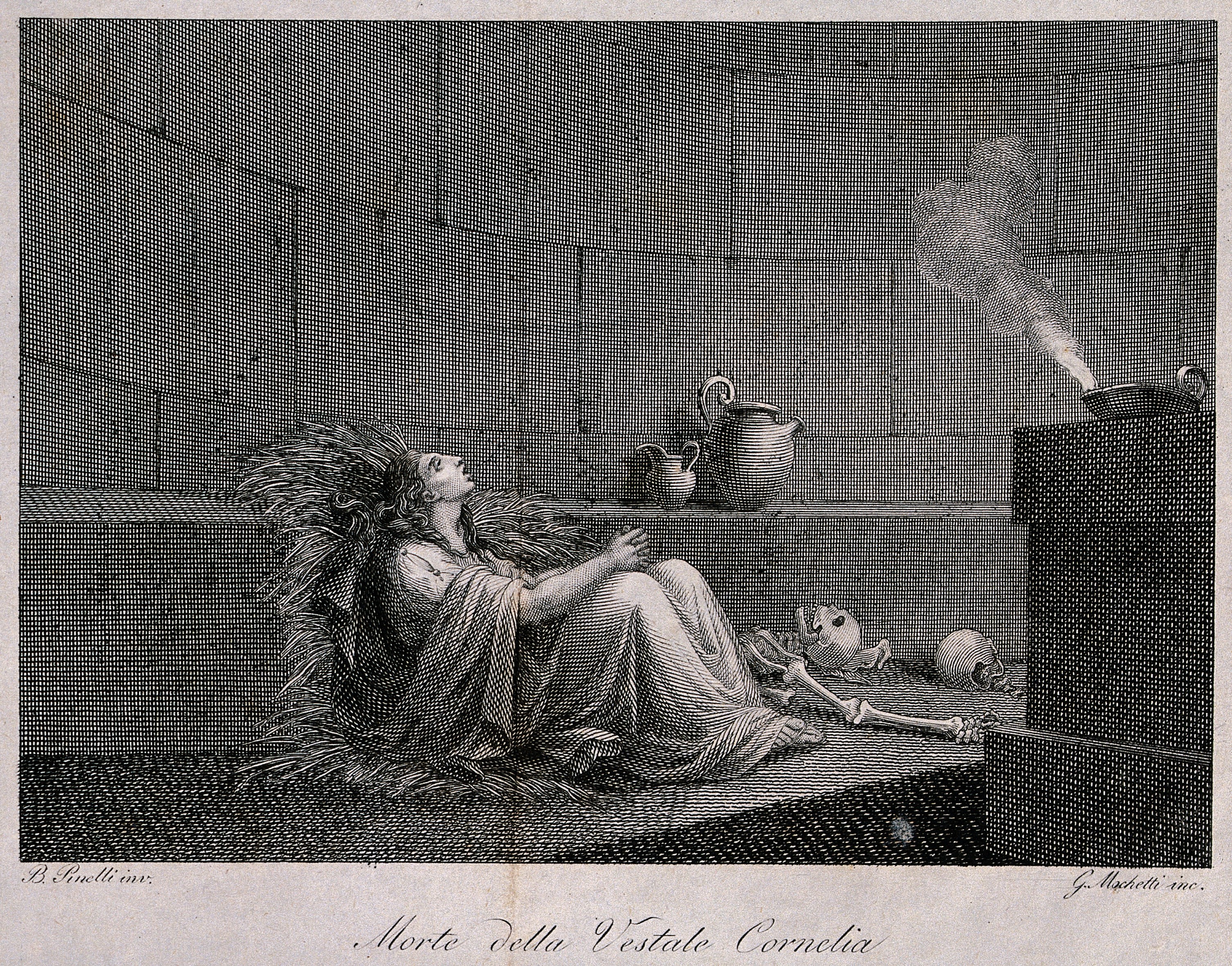
The Vestal Virgins were women priestesses to the Goddess Vesta, of the Hearth, the home and domestic life, in Ancient Rome, who took a vow of chastity. Being selected as a vestal virgin was a great honour, but if a vestal virgin allowed the sacred fire to go out, or was found to be unchaste, she could be bricked up in a chamber and left to starve to death.

Heidelberg, Germany

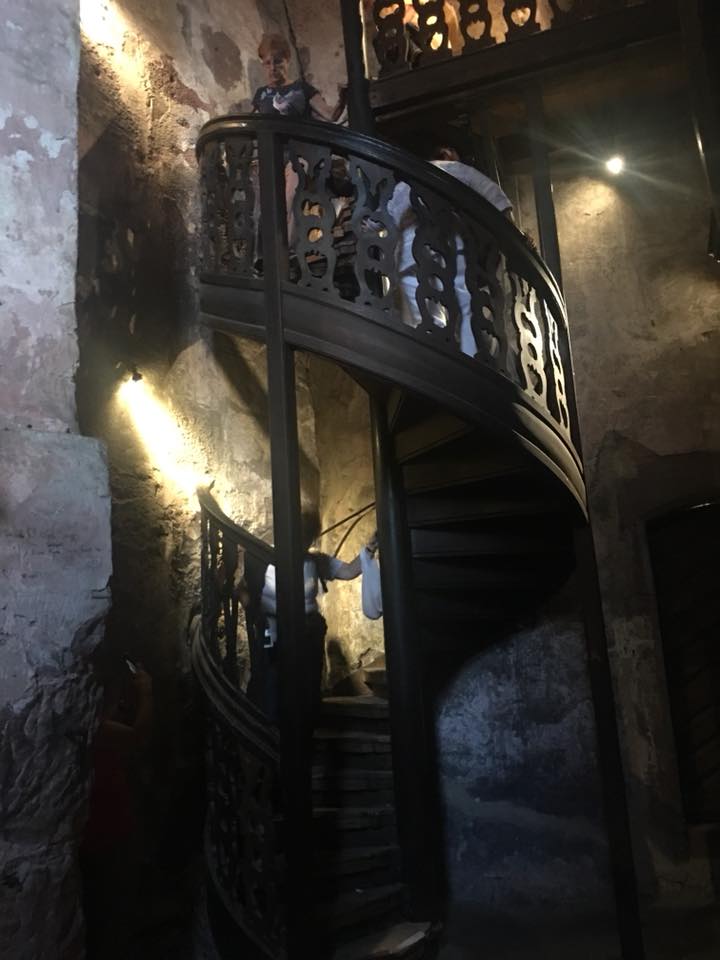
In 1770, the remains of an entombed knight were found at Heidelberg Castle, inside a sealed niche next to the staircase leading to the castle dungeon. 

The skeleton was dressed in full armour, with a helmet which still carried traces of gilding, along with several sword strokes. It is not known whether the entombment was a punishment or a special form of burial. 

The knight’s suit of armour became part of the antiques collection of the Prince Electors, and another suit of armour was placed in the niche.

The Kingdom of Hungary 

This is a copy of the original portrait of the Countess Elizabeth Bathory from 1585 
The female 17th-century Hungarian serial killer, Countess Elizabeth Báthory, was good-looking, well-educated and wealthy. She was born in 1560, into a family which ruled Transylvania. At the age of 11 or 12, Elizabeth was betrothed to Ferenc Nádasdy, who also came from an aristocratic family. They married when Elizabeth was fourteen but as her husband was a soldier, he spent a lot of time away and Elizabeth had lovers.

It soon became apparent that Elizabeth was a sadist. Many said a vampire. She tortured and killed many young girls, including servants and those belonging to local gentry and she drank their blood as she believed that it would keep her youthful. There were also suspicions of cannibalism. According to the Budapest City Archives, the girls were burned with hot tongs and then placed in freezing cold water and covered in honey and live ants.

In 1610, Elizabeth was arrested and she was sentenced to be held in Csetje Castle, in a room whose windows were walled up. She was 54 when she died in 1614.

Poughkeepsie, New York

Joann Nichols was a 55-year-old former first-grade teacher at Gayhead Elementary School in Hopewell Junction, New York, when she went missing in 1985. Ms Nichols did not attend a hairdresser appointment and she could not be located. Her husband, James Nichols, reported her missing on December 21, 1985.

James Nichols helped police find his wife's car in the parking lot of a shopping mall and he told the police that his wife had called him on Christmas Eve morning, saying that she was fine, then she quickly hung up.

Twenty-eight years later, the skeleton of Ms Nichols was found behind a "false wall" in the basement of her own home. An autopsy showed the cause of death was blunt force trauma to the head. Her husband, James Nichols, had died in December 2012.

Galway, Ireland

The Bon Secours Mother and Baby Home, in Galway, Ireland, operated between 1925 and 1961, as a  maternity home for unmarried mothers and their children. The Home was run by the Bon Secours Sisters, a religious order of Roman Catholic nuns.

Not only were around 1,000 children illegally adopted from this home, but "a vault with twenty chambers" was revealed behind the walls of the septic tank, containing the bodies of 800 children.

A child died at this institution, on average, almost every two weeks between the mid-1920s and 1960s.

The Virgin Whose Body Tried to make A Baby

An ovarian tumour is a generally a benign growth in the ovaries, also called a germ cell tumour or dermoid cyst, which occurs when an immature egg attempts to create various body parts on its own. These cysts are composed of different types of tissue, such as, hair, muscle, or bone.

In 2003, Japanese doctors were operating on a 25-year-old virgin female when they found the most advanced ovarian teratoma yet found. What the doctors saw, was a small, mostly complete doll-like body, which appeared similar to a normal foetus.

The deformed body of this foetus-like thing was covered with fine, downy hair; it had spina bifida (“split spine” in Latin) and its brain failed to divide into two normal hemispheres. A single “eye” with long, thick eyelashes was set in the centre of its forehead. It had one ear, all its limbs, a brain, a spinal nerve, intestines, bones, and blood vessels and a jaw, with a few teeth. And even more disturbingly, it had something that looked like a phallus between its legs.
Cyclops-genetic condition which causes a foetus to have only single eye in the centre of head
Another nightmare inducing ovarian teratoma was found during an appendectomy on a 16-year-old female patient. The doctors found a partially formed brain with its cerebellum covered by thin skull bone.

A baby girl in China was found to be “pregnant” with twins after being born in Queen Elizabeth Hospital in Hong Kong. She underwent surgery at 3 weeks of age to remove the foetuses that were believed to be at 8 to 10 weeks of gestation.
In 2009, a British man named Gavin Hyatt “gave birth” to an “undeveloped identical twin” when a 4cm growth parasitic twin that he had absorbed after it had died in the womb, early in their mother's pregnancy. Hyatt named the tiny creature “little Gav.”


Explaining Why Some Animals Like To Live Alone

Animals which live in groups experience reproductive competition and conflict, and so, some species resolve this problem by living alone.

Our closest relative, chimpanzees, with whom we share 99% of our DNA, live in a fission-fusion society; which means that the group's size and composition are fluid and change over time with merging of groups and splitting of the group occurring.

Chimpanzee groups also feature dominance hierarchies. But of course, there are benefits and costs of aggressive competition within a group. Male chimps will compete aggressively for positions in the social hierarchy. While, generally, female chimpanzees often emigrate to another community after reaching sexual maturity, entering the new group at a low level and waiting for senior high-ranking females die, so that they can rise in the hierarchy of the group. Other females chimps, however, are aggressive to immigrant females and they will kill the newborn infants of other chimp community members.
Image from page 56 of "The American natural history : a foundation of useful knowledge of the higher animals of North America" (1914)
Of all of the species of animals in the world, humans and chimpanzees, are among the few who engage in coordinated attacks on the same species. Although chimps can exhibit selfless behaviours and even understand and mourn death, they also actively seek out to attack others, as do humans.

Human females cease being able to produce offspring midway through their life span, as do Killer whales. This means that a mother will be fertile for a relatively small part of her daughter's life. The reason for this low degree of reproductive overlap between generations is an evolutionary adaption which reduces reproductive competition between generations, giving the younger female an advantage in reproductive conflict with older females.

While the significant costs of reproductive competition and conflict are inevitable in group‐living species, some animals are more solitary, avoiding each other, except during mating, territorial encounters, or when raising young.

Solitary animals like polar bears, eagles, opossums, skunks, owls, tigers, cougars, pumas, armadillos, and orangutans, live in a solitary manner to avoid competition over food, space, mates and shelter. Such animals often exhibit a reduced need for bonding and attachment and less separation distress, but they tend to be are fiercely territorial.


Books To Read

Hour of the Wolf, is a steampunk novel written by Andrius Tapinas.

Victorian Era Superstitions Were Barmy and Strange

The Victorian Era (1837-1901), was a strange and prudish time, when the sight of a bare ankle was deemed scandalous and people often used the language of flowers to convey their feelings.

While the homes of the era were often dark and gloomy, filled with over-stuffed furniture and cabinets of taxidermied birds and skewered butterflies behind glass, the funeral customs were often highly theatrical and elaborate, shrouded in superstition and belief in the supernatural.
When Prince Albert died in December 1861, Queen Victoria was plunged into a period of intense mourning. She wore black for the remaining forty years of her life and rarely appeared in public.
However, the rules of mourning for most people, at this time, were also rigid, complex and expensive. 

The main reason for the strict adherence to mourning rituals was that death was more commonplace and public than it is today. Three out of every twenty babies might die before their first birthday in those days and the elaborate customs provided a sense of stability. There was also the superstitious idea that additional deaths might be avoided by following certain rituals.

Cover The Mirrors

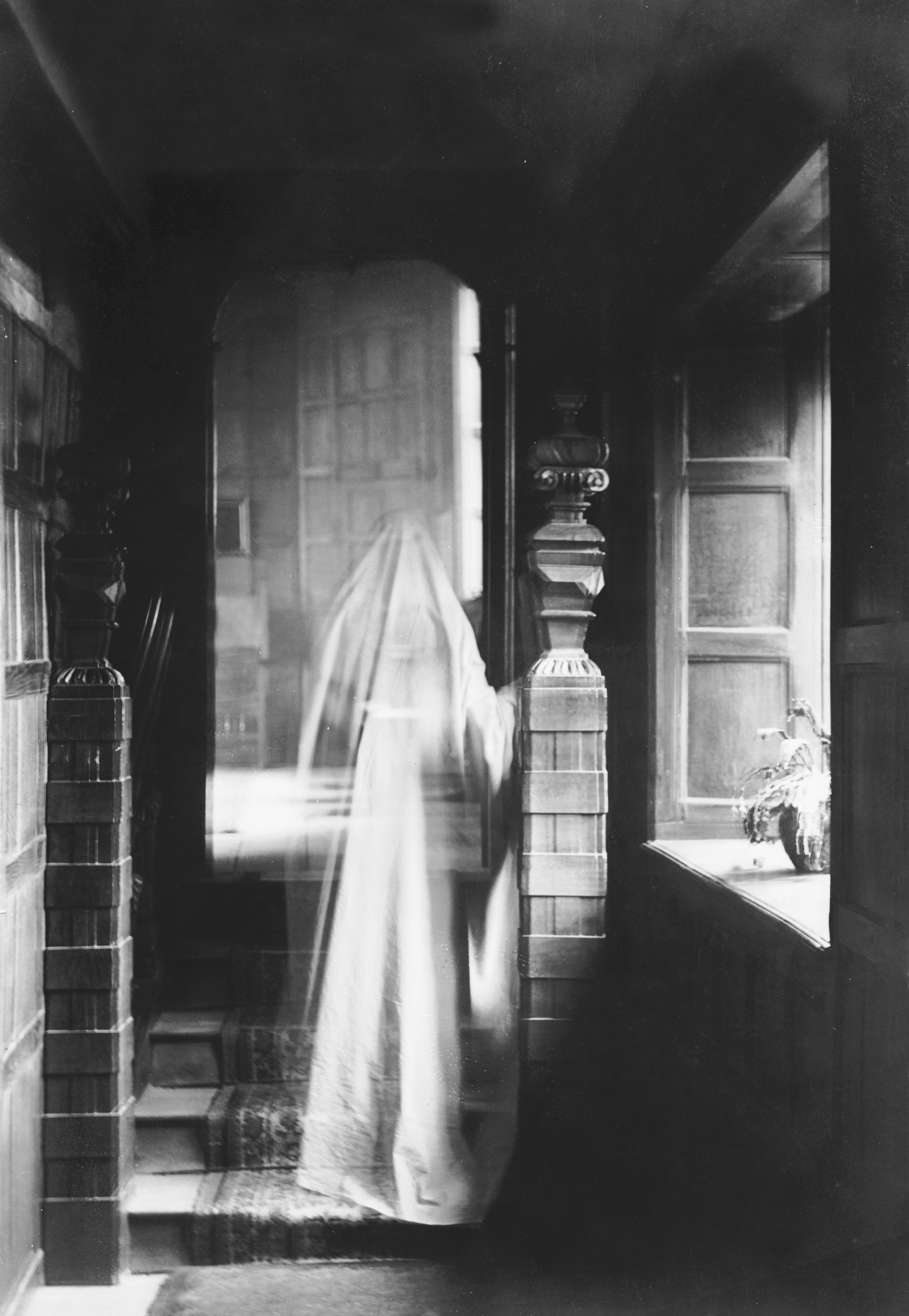
When someone died, the curtains of the house were closed, clocks became silent and mirrors were covered, because of the belief that the spirit of the deceased might become trapped in the glass. 

If you were out walking one day and you happened to run into a funeral procession, it was believed that this may bring you bad luck. If you were able, then it was advisable to turn around and go another way. However, if this was not possible and you had no choice but to continue toward the funeral party, then you could avoid bad luck and a bad future, by holding tightly onto a button. How the button attained this power was never explained. 
John Hislop Undertakers, Brisbane, circa1902
The dead mostly stayed at home, until the burial in the Victorian era. For the poor with limited space, this might mean having grandma in the front parlour, or a dead sibling in the same room. But most families, rich and poor, put themselves into debt to properly respect the dead and give them a decent burial.

Black Ostrich Feathers 

Coffins might be of rich, expensive timbers and intricately carved. Horses might be adorned with black ostrich feathers and the hearse was often expensive and black as night. Professional mourners (called mutes) might be hired to take part in the funeral procession and deep mourning required the wearing of black clothing and armbands for men, for a prescribed amount of time. A widow was expected to mourn her husband and wear black for at least two years. After this, there was a period of "half mourning", when dresses of grey or lavender could be worn.

Shops had to supply these morning clothes and Jay’s of Regent Street, London, was one of the best. Women might also buy a mourning broach and keep a lock of the deceased's hair inside, or wear jewellery made from jet. The poor, however, often dyed their clothing and then bleached it after the period of mourning had finished, as the cost of another set of clothes was beyond their means.
 Mrs Brown is dressed in mourning following the death of her husband, circa 1908
Harbingers Of Death

After the funeral and the mourning period had finished, it was still not possible for the Victorians to relax as they believed in so many superstitions and omens about death. For example, if a person smelled roses and there were no roses about, then this was considered a harbinger of death. Yours or someone else close to you. Seeing an owl in the day time was also an omen of death, as was three knocks at the door and no visitor; a dog howling, a vase of red and white flowers together and opening an umbrella inside the house, were also dire. 
People in the Victorian era thought that tying black ribbons onto things could stop death and so black ribbons were tied to doorknobs and added as trimmings on underwear and handkerchiefs and even pets would have be-ribboned tails. If a family had experienced too many deaths, in a short amount of time, they may have insist that guests to their home wear a crepe ribbon, as they stepped through the door....just in case.


De mortuis nihil nisi bonum. "Of the dead, [say] nothing but good"


Books To Read


Rebecca, by Daphne du Maurier. “Last night I dreamt I went to Manderley again.”

The Witch Suspected Of Killing Between 1,000 and 2,500 People


Catherine Monvoisin, born in about 1640 (maiden name Deshayes), lived during the reign of Louis XIV and was commonly known as La Voisin. She was a French merchant, a poisoner and an alleged sorceress, who was seriously into black magic and devil worship.
Monvoisin's husband was a jeweller with a shop at Pont-Marie, not far from the Louvre. After her husband went bankrupt, she began practising palm-reading and face-reading (physiognomy). She was a midwife but she became an abortionist, with many wealthy and aristocratic clients.

Soon, Monvoisin added the selling of love potions and aphrodisiacs to fortune telling, and then, other potions were created by her for the purposes of bringing about the death of an enemy or a spouse. Theses potions would contain such things as toad bones, human blood, ground up mummies and moles' teeth.

Business was booming and Monvoisin wanting to really look the part of the successful sorceress, purchased an extravagant red velvet dress embroidered with gold eagles for the price of £ 1 500, which was a small fortune in those days.

With many clients among the aristocracy, like Olimpia Mancini, Countess de Soissons; Maria Anna Mancini, Duchess of Bouillon; Elizabeth, Countess of Gramont ("the beautiful Hamilton") and François-Henri de Montmorency, Catherine Monvoisin was raking in the money.
Elizabeth Hamilton, Countess of Gramont
Although Catherine Monvoisin supported her family of six, including her husband, she also had six lovers, including the executioner, Andre Guillaume and magician Adam Lesage. One of her lovers, Monsieur Latour, abused her and she was known to be an alcoholic.

Monvoisin's abortion business grew and she had others working for her performing abortions; such as the midwife, Catherine Lepère, who was later exposed and executed by hanging. Claims were also made that the aborted fetuses were burned in a furnace and buried in the garden of Monvoisin's home.

Black masses were conducted by Monvoisin where the blood of babies would be gathered in a bowl over an altar and people would pray to the devil to fulfil their wishes. It was alleged that Monvoisin paid prostitutes for their infants to use in her rituals.

Adam Lesage, a professional occultist and alleged sorcerer, also helped with the magical rituals; like the one with the royal mistress, Madame de Montespan, who requested that Satan help her gain the king's love. Montespan did subsequently become the official mistress of the King, and after this, she employed Catherine Monvoisin whenever she had a problem in her relationship with the King.
Louis XIV. He first met Madame de Montespan at the Palais du Louvre.
The priest Étienne Guibourg also performed Black Masses with Catherine Monvoisin. The English clergyman and author, Montague Summers, gave this account of one of the masses:

A long black velvet pall was spread over the altar, and upon this the royal mistress laid herself in a state of perfect nudity. Six black candles were lit, the celebrant robed himself in a chasuble embroidered with esoteric characters wrought in silver, the gold paten and chalice were placed upon the naked belly of the living altar [...] All was silent save for the low monotonous murmur of the blasphemous liturgy [...] An assistant crept forward bearing an infant in her arms. The child was held over the altar, a sharp gash across the neck, a stifled cry, and warm drops fell into the chalice and streamed upon the white figure beneath. The corpse was handed to la Voisin, who flung it callously into an oven fashioned for that purpose which glowed white-hot in its fierceness.
In 1673, the king Louis XIV lost interest in Madame de Montespan and in 1679, he entered into a relationship with Angélique de Fontanges. Madame de Montespan then requested that Catherine Monvoisin have both the King and Fontanges killed. However, before Catherine Monvoisin could make an effective murder attempt on the king and his new mistress, a public riot took place where people accused witches of abducting children for the black masses. This led to the arrest of various famous fortune tellers of Paris and then, to the arrest of Catherine Monvoisin herself.
Mme de Montespan, by Pierre Mignard, c 1670
Monvoisin was executed in Paris on 22 February 1680.


Books featuring Catherine Monvoisin

The affair of the poisons : murder, infanticide, and Satanism at the court of Louis XIV by Anne Somerset. 

The Affair of the Poisons: Louis XIV, Madame De Montespan and One of History's Great Unsolved Mysteries by Frances Mossiker. 

Athenais: The Real Queen of France by Lisa Hilton.

Baneful Sorceries or The Countess Bewitched by Joan Sanders 

The Oracle Glass by Judith Merkle Riley
 
Strange Revelatios: Magic, Poison, and Sacrilege in Louis XIV's France by Lynn Wood Mollenauer

This Dude Was Talking at Four Months of Age

Michael Kevin Kearney was born in 1984 in Hawaii and by four months of age he was learning to talk and could ask his parents "What's for dinner?"

At the age of six months Michael was able to tell the paediatrician, "I have a left ear infection". I wish I could have seen the doctor's face. Then, at 8 months he was learning to read. Not really fair is it?

Michael was homeschooled by his parents, especially, by his mother, Cassidy, a Japanese American. But at age four he became a member of Mensa, whose members have IQs in the top 2 percent of the population. His younger sister, Maeghan, is also a child prodigy.

As a toddler, Michel took the television apart and tried to see if the cat could fly.

Believe it or not, at six years of age Michael had earned his school certificate and enrolled in junior college. He was also diagnosed with ADHD but his parents rejected the use of drugs for the condition. Another doctor called him retarded. Really!

At age eight, Michael earned an associates degree and in 1994, he received a bachelor's degree in anthropology, from at the University of South Alabama.

At 14, Michael had a master's degree in chemistry from Middle Tennessee State University and at age 18, he earned a master's degree in computer science from Vanderbilt University.

When Michael was 22, he earned his doctorate in chemistry from Middle Tennessee State University. He has also appeared as a contestant on various games show and won twenty-five thousand dollars from Who Wants to be a Millionaire? He has also appeared on Drunk History, an American educational television comedy series and performed at Nashville Improv.


Books To Read

The Believing Brain: From Ghosts and Gods to Politics and Conspiracies---How We Construct Beliefs and Reinforce Them as Truths, by Michael Shermer.

Animals and Virgin Birth: No Daddy Needed


Virgin birth or asexual reproduction, which is otherwise known as Parthenogenesis, is not as rare as you might think. Recently, virgin birth has been observed in certain types of snakes, but other animals like chickens, sharks, lizards and plenty of species of bees and insects can do it.

There are different mechanisms involved in creating offspring in this way. However, basically, full clones have all their mother's genetic material and half-clones, which can occur due to terminal fusion, have a little over half the mother's genetic material.

The fearsome and let's face it, ugly, Komodo dragon, is the largest living species of lizard and this monster, believe it or not, can replicate itself without the need of a daddy. Offspring are not exact clones, as genetic material gets shuffled about. Generally, however, Komodo dragons do form pair bonds and have a once a year mating period. Males, as usual, fight over desirable females and often, vomit or defecate when getting ready for a brawl.
Komodo dragon
Certain types of sharks are also capable of virgin birth like the odd-looking hammerhead shark. Hammerheads, too, usually have a once a year mating period and the mating process usually involves the male shark aggressively biting the female, until she will mate with him. Female sharks, however, can fertilise their own eggs (sounds preferable), by parthenogenesis, but usually, there will be only one offspring produced.
The hammerhead shark
The humble chicken and turkey can also clone themselves, if there is no male to oblige. However what about us humans? Hwang Woo-suk, a former professor at Seoul National University claimed that he had successfully cloned a human embryo. However. rather than a story of pioneering science, this case turned into a tale of fraud, scandal and shame.


Books To Read

The Prestige, is a novel by British writer Christopher Priest. The events of the past are revealed through the diaries of magicians Rupert Angier and Alfred Borden. The diaries read by their great-grandchildren, Kate Angier and Andrew Westley (born Nicholas Borden) in the present day, and diary entries are interspersed with events of Kate's and Andrew's lives throughout the novel.

Isaac Newton: A singular Fellow and Genius

Isaac Newton is widely considered to have been a genius. He was an astronomer, mathematician and physicist, whose ideas laid down some of the most important scientific foundations. However, he was also a very odd fellow.
Godfrey Kneller's 1689 portrait of Isaac Newton (age 46)
Newton did not get on too well with others, he was very private and extremely introverted. He seems to have had a bit of a temper and was known to resort to violence, by giving out a beating to those he believed deserved it. Newton also tried to destroy the reputation of Gottfried Leibniz, who had discovered calculus at around the same time as Newton. At university, Newton was generally considered a poor scholar, as he mostly disregarded the subjects that he was supposed to be studying. Luckily, his mathematical genius was noticed. 

When he was young he actually made up a list of sins that he had committed and one of them was "Beating Arthur Storer". Another sin was making a mousetrap on Sunday and another was "squirting water" on the Sabbath. Woopie-do!
Woolsthorpe Manor, Lincolnshire, birthplace of Sir Isaac Newton
Newton was also a religious zealot, but he had his own set of radical ideas. He was a Catholic but did not believe in the Trinity. He also believed that worshipping Jesus as God was a sin. Newton did, however, end a friendship with an acquaintance who made a joke about a nun. On his death bed, Newton refused to receive the sacrament and he also said that his greatest achievement in life was that he would die a virgin. 


Books To Read

All Cats Have Asperger Syndrome, by Kathy Hoopmann

500 Years After Martin Luther We Have A Robot Priest

It was in Wittenberg, Germany, where Martin Luther lived and preached that he nailed his 95 Theses, to the door of the Castle Church, on October 31, 1517. Now, 500 years later, in the same town, we have a robot priest who is again challenging religious tradition.

The robot called BlessU-2, can deliver blessings in five languages, as beams of light shine from its hands. However, whilst there is an undoubted worldwide lack of priests, the purpose of this robot, is to make people question whether a robot could ever replace a priest in his role and deliver pastoral care.

Just thinking about how my local priest had to resign a few years ago because he was carrying on with five married women in his parish and all the many other scandals in the priesthood in recent years, this robot may well be a good idea.
BlessU-2

Books To Read

The Science of Good and Evil: Why People Cheat, Gossip, Care, Share, and Follow the Golden Rule, by Michael Shermer.

Psychopaths in Power


Psychopaths, according to research, are prevalent in positions of power. This is because they crave the influence, authority and sense of importance that powerful positions can bring them. And mostly, psychopaths are prepared to do whatever it takes to get to where they want to go.

Psychopaths are all around us. Especially above us making the decisions and manipulating people and situations to suit their own agenda. Psychopaths will say one thing and to do another. They know how to appeal to and manipulate people, To get what they want. Which means that the powerful psychopath might say, "I understand what you want and I know how to deliver it", whilst manoeuvring and steering things to his own advantage.

Power, prestige and money are great motivating factors for most psychopaths. It is estimated that about one in five corporate bosses are psychopaths and psychopaths are over-represented in politics, where Machiavellian, ruthless-grandstanding is the order of the day.
The three personality traits which define psychopaths are referred to as the “dark triad.” They are narcissism, psychopathy and a tendency toward Machiavellian behaviour. And according to research, people with these dark tendencies seem to be skilled at making themselves more attractive to us, often by wearing flashy clothing, projecting confidence and through attractive facial expressions.

Most of us feel the powerful pull of these people with dark tendencies. This is why the brooding bad boy and the mean girls at school seem to get away with so much. The sense of power and confidence that these damaging people project really seems to beguile and attract others.

The problem is, that the rest of us are letting the psychopaths, narcissists and Machiavellian types rule our world. We are being conned by the bold and confident behaviour of these people who only wish to exploit the rest of us. We are letting these dark types build their oligarchic systems in our schools, our workplaces and our countries. As it stands, we are the puppets and they are the masters. But perhaps, one day, we can wise up and change the current state of the power play. Perhaps.


Books To Read

Without Conscience: The Disturbing World of the Psychopaths Among Us, by Robert D. Hare.

Women First Given Vote......By Accident

New Zealand was the first country in the world to grant national voting rights to women, when the Governor, Lord Glasgow, signed the Electoral Act into law on 19 September 1893.

Australia, however, was the first country in the world to give women both the right to vote in federal elections and the right to be elected to parliament on a national basis. Britain and the United States, on the other hand, did not give women the right to vote until after the First World War. Women in Saudi Arabia did not get to vote until 2015.

But women in Victoria, Australia, actually had the right to vote back in 1863, when the Electoral Act 1863 gave "all persons" listed on local municipal rolls the right to vote in elections. Some women in Victoria obviously realized they were actually "persons", and so, they took advantage of this law and voted in local elections. A newspaper article reported:

“At one of the polling booths in the Castlemaine district a novel sight was witnessed. A coach filled with ladies drove up, and the fair occupants alighted and recorded their votes.”
The Argus, 5 November 1864, p 4.

The accidental enfranchisement of women was taken away in 1865 when the law was changed.
Suffragette movement in Queensland, 1909.

The Unfortunate Inventor

The American Doctor Thomas Midgley Jr. (1889 –1944) was a mechanical engineer and chemist; he was also an inventor, but not a very good one in the end.

Whilst working for a subsidiary of General Motors in 1911, Midgley discovered that the addition of Tetraethyllead to gasoline prevented "knocking" in internal combustion engines. But instead of saying that lead was being added to petrol, the company decided to call the additive "Ethyl".
Then in 1923, Midgley had to take a bit of a holiday because he had lead poisoning. Luckily,  Midgley was a grown man, because developing children who are exposed to lead are often cognitively impaired, with lower intelligence, exhibiting aggressive behaviour, because lead competes with calcium in the cell, which is very important for brain development.

Interestingly, the lead-crime hypothesis proposes that the decrease in crime in America that began in the mid-1990s and continues today, may be due to lead being removed from petrol.

After this, Midgley was involved in the invention of chlorofluorocarbons (CFCs), called Freon. This substance was used refrigerators, inhalers and aerosol spray cans. Later we found out that these type of gases have depleted the ozone layer and contributed to the greenhouse effect, which is impacting natural ecosystems and biodiversity and a factor behind climate change.

These two inventions have now been banned. J. R. McNeill, an environmental historian expressed the opinion that Midgley "had more impact on the atmosphere than any other single organism in Earth's history."

Midgley died in 1944 when he became entangled in one of his own inventions, which he had created after polio left him disabled. The system of strings and pulleys that he devised to help others lift him from bed, strangled him. At least he tried.


Books To Read

Mistakes That Worked: 40 Familiar Inventions & 40 Familiar Inventions & How They Came to Be, by Charlotte Foltz Jones.

Off With The Fairies

I have never believed in any sort of supernatural beings; people are different, after all. But I have always been mystified as to why the various gods seem only able to communicate their contradictory ideas and messages through ancient books and inside the heads of some people. And why are the gods silent when hideous violence is committed by mad people in their name. But perhaps that's just me.

Before Christianity, which is followed by 2.1 billion people and Islam (1.3 billion), there was Hinduism (900 million) and Buddhism (376 million). And before these religions, which are still practised, there was Paganism.

The Irish version of paganism was particularly imaginative and interesting with beliefs in fairies like the Leprechaun and the Banshee. The leprechaun makes an appearance in the medieval tale known as the Echtra Fergus mac Léti (Adventure of Fergus son of Léti); but their origin can probably be traced back to 8th-century tales of water spirits, which were known as ‘luchorpán’. A banshee, on the other hand, is a female spirit in Irish mythology, who predicts the death of a family member, usually by shrieking or keening. The origin of the banshee may be traced to the keening mourning women at funerals, who accepted alcohol as payment for their services and were later condemned by the church.
Banshee by Michael1010
There were lots of other fairies like the headless dullahan, a black-robed horseman, who carries his head on his saddle. He can see at great distances, even at night, but if you see him, you will be rewarded with a bowl of blood thrown in your eyes or even blindness.

The pooka is a fearsome fairy who can take many frightening forms. It roams about the county at night and the sight of it can stop the hens from laying and the cows from giving milk. If you happen to be in county Wexford and you look up and see a huge eagle, run, as it might just be a pooka. The pooka may derive from the horse cults of early Celtic times.
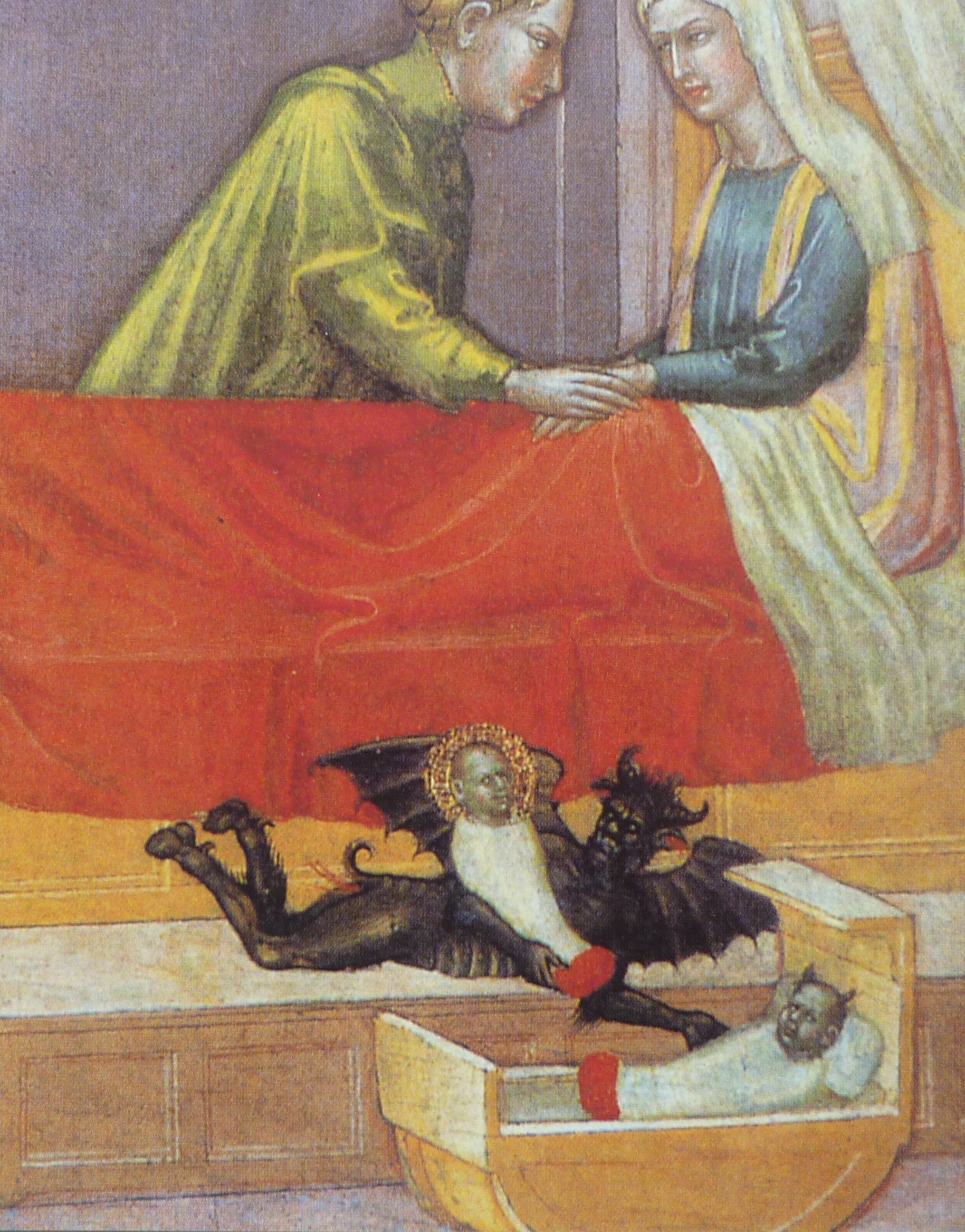
As an avid reader of fairy tales in my childhood, I can recall the frightening concept of the changeling, which may be a stunted and often deformed baby born to the fairy folk. These fairy folk, however, prefer a perfect human child, and so, perform a swap-see. It gets worse though, because changelings can also be demented old fairies disguised as children, or, objects such as pieces of wood which take on the appearance of a child through magic. The changeling idea may have provided an explanation for a child born who was mentally or physically impaired, in some way.

There are other fairies of course, but you may seek them out for yourself.


Books To Read


Beasts of the Frozen Sun (Frozen Sun Saga #1) by Jill Criswell - inspired in Celtic and Viking mythology.

When Only a Few Thousand Humans Lived on Earth

Between 50,000 and 100,000 years ago, there occurred a very sharp decrease in the human population, so that only 3,000–10,000 individuals lived on Earth. Evidence of this very small human population is supported by genetic evidence.

Humans came very close to extinction at this time, because only about 1000 of these individual humans were capable of producing offspring. Humankind struggled to survive for thousands of years, until some time during the Stone Age.

You may have heard the theory about how climate change caused by a volcano helped to bring about the near extinction of dinosaurs (chickens still exist), well, around 70,000 B.C., a volcano called Toba, on Sumatra, in Indonesia, almost wiped out humanity.

As the largest volcanic eruption ever known, Toba poured so much ash, dust and vapour into the air that ash covered the ground and the sun's light was dimmed for about six years. Food became scarce and the Earth became cold and vegetation was wiped out.

Humanity recovered. In 1750 there were 700 million people on the planet and in 1804, the human population reached one billion individuals. Currently, human population appears to be out of control with in excess of 7.5 billion people sharing this planet.

With humanity threatening to overcome the carrying capacity of Earth, we face a future of climate change and possibly wars over diminishing and scarce resources. And yet, the subject of human population is rarely mentioned.


Books To Read

The Crack in Space is a 1966 science fiction novel by American writer Philip K. Dick. On a future Earth (c. 2080 CE) overwhelmed with severe difficulties related to overpopulation.

John Stuart Mill's Odd Childhood

Undoubtedly, John Stuart Mill the English philosopher was a genius who made significant contributions to social and economic theory. It was, however, his father, James Mill's intention to create a genius.

James Mill was a Scottish historian, philosopher, political theorist and economist, who had a definite education plan in mind for his son. And so, John Stuart Mill was homeschooled and taught to read at the age of two.

By the age of three, John Stuart Mill was learning Greek and by the age of eight, he was quite familiar with Xenophon's Anabasis, the writings of Herodotus, Lucian, Diogenes Laërtius, Isocrates and Plato. He also read widely and studied history, arithmetic, physics and astronomy.

Mill's father was not a warm or loving man as he regarded emotions as being akin to madness. He was also somewhat of a tyrant, as well as being self-controlled and stoic. But whilst he was greatly possessive of his son, he also berated him for his stupidity, causing John Stuart Mill, the man widely regarded as a genius, to have a life-long inferiority complex.

John Stuart Mill
Not being permitted to mix with other boys of his own age, John Stuart Mill mixed with his father's friends. Friends like Jeremy Bentham, the English philosopher, another political radical. He was also denied holidays, as his father believed that such an indulgence would lead to idleness.

So John Stuart Mill spent his childhood deep in rigorous studies under the severe eye of his father, in an atmosphere of fear and repression. Though, Mill admired his father in many ways for his civic spirit, his intellect and his moral values.

As to Mill's mother, she seems to have figured little in his emotional and intellectual development; though it seems that Mill would have liked to have had a warm-hearted, sensitive and affectionate mother, she too was subjugated by her husband to be so.

This emotionally deprived childhood and the ambivalent feelings aroused in John Stuart Mill, led to a mental breakdown at the age of 20, when he descended into depression. Mill, also, had become disillusioned with some of his father's ideas and he wanted to be more independent. He described himself as a ship without a sail.

After about a year of gloom, Mill was able to enjoy "in sunshine and sky, in books, in conversation, in public affairs". And soon, he would meet Harriet Taylor, who would bring Mill lots of happiness, even though they had to wait 21 years to be married. But that is another story.  


Books To Read

Is It Just Me?, by Miranda Hart - for the clumsy and awkward.....like me.

The Guinea Pigs of Lithium

How lithium came to be used as a treatment for bipolar disorder is quite an interesting story, which began at a Mental Hospital in Melbourne, Australia.

Dr John Cade (1912 –1980) was an Australian psychiatrist who served in the Armed Forces during World War II. Cade, however, became a prisoner of war at Changi Prison from 1942-1945.

Little was known about the causes of bipolar disorder back in the 1940s, but Cade had the idea that patients suffering from this condition may have had a metabolic disorder, which could be ascertained by the levels of urea in their urine. He believed that mania would cause an excess of uric acid in the urine and depression, he believed, would result in a deficit of uric acid.

So Cade began to conduct experiments which involved injecting urine from mentally ill patients into the abdomen of guinea pigs; only to find that the guinea pigs injected with the urine of the mentally ill patients died much faster than those that were injected with a healthy sample of urine

Acting on his hypothesis, that uric acid was present in the urine samples, provided by his mentally ill patients, Cade tried to increase the water solubility of uric acid and so he added lithium urate. 

After Cade added the lithium to the guinea pig injections, he found that the animals became very docile and quiet and they did not run about in their usual manic manner.  
Before testing lithium on his patients, Cade first tested the substance on himself for a few weeks and then, he began to give lithium to one of his patients, a man who was alienated from his family and who had been living in the asylum for 30 years, called Bill. 

With the lithium, Bill began to improve and his speech and self-care became better. After a while, Bill was able to return to his job. 

Unfortunately, Bill stopped taking lithium and his mental health deteriorated and he had to return to the asylum. 

Not knowing about the toxicity of lithium at high dosages, Cade gave Bill increased amounts of lithium, in an attempt to restore Bill's sanity. In 1950, Bill died from lithium toxicity. 

Over time, more research was conducted on lithium as a treatment for bipolar disorder to establish safe and effective dosages.
There are various ways proposed that may explain how lithium may work as a mood stabiliser, such as inhibition of protein kinase C and glycogen synthase kinase 3 and inositol-depletion.


Books To Read

The Marriage Plot, by American writer Jeffrey Eugenides. The story concerns three college friends from Brown University—Madeleine Hanna, Leonard Bankhead, and Mitchell Grammaticus—beginning in their senior year, 1982, and follows them during their first year post-graduation.

Your Plastic Clothes and Inter-generational Theft and Destruction


Synthetic clothing made from nylon, polyester, acrylic, polypropylene and lycra, are made from petroleum and petroleum is a finite resource, as it takes so long to form. In fact, 70% of the world's oil deposits were formed in the Mesozoic age 252 to 66 million years ago.

When our deposits of petroleum are exhausted, they cannot be restored.

A lot of the fashion for sale today in the big shopping malls are made of synthetic fibres. These cheap, "plastic" clothes are not only awful to wear, as they make you sweat and itch, but they also look bloody awful after they are washed, and so, are often thrown out after only being worn a few times.


While clothing made from natural fibres are more easily biodegradable, synthetic fibres, generally, will outlive you. And as they sit in landfills, they shed microplastic particles into the environment. But even before you get rid of your synthetic clothes, they are releasing more than 700,000 microscopic plastic fibres in each washing load. These microplastics poison the food chain, building up in the digestive tract of animals, reducing their ability to get energy from their food, and in some cases, changing animal behaviour.

While many right-wing newspapers continue to claim that the Earth has more oil than it needs, this is not strictly true. The official industry view is that global reserves will last 53 years at current rates of consumption. But as oil reserves get ever harder to access, some countries, like the US and China, who are desperate to be self-reliant and sustain cheap sources of oil, have resorted to "fracking"; this is where high-pressure water, chemicals and sand are blasted deep into rock to release oil and gas reserves.

Fracking can contaminate underground water supplies, cause minor earthquakes and release toxic wastewater into the surrounding environment. Canada also produces around 1.9 million barrels of oil a day from tar sands, which Al Gore, the climate activist has described as "the dirtiest source of liquid fuel you can imagine".

But this sense of entitlement that many of us have, when we buy and quickly discard cheap, plastic clothing, has more than huge environmental costs. We are also, essentially, stealing from our children and following generations, who will have to deal with the results of this outrageous material consumption, as they, at the same time, are denied a share in the bounty, as resources are fast depleting.
In past generations, most people were thrifty and frugal, buying clothing of quality, which would last. Virtues that we should resurrect in this era of narcissistic, "I deserve it", consumption; because, the world's human population is still growing and more people are wanting to buy more and more clothes. The earth's resources and its environment have limits, but the squandering and degradation continues as I type this page.

Books To Read

The Stone Gods, by Jeanette Winterson. This novel opens on the planet Orbus, a world very like Earth, running out of resources.